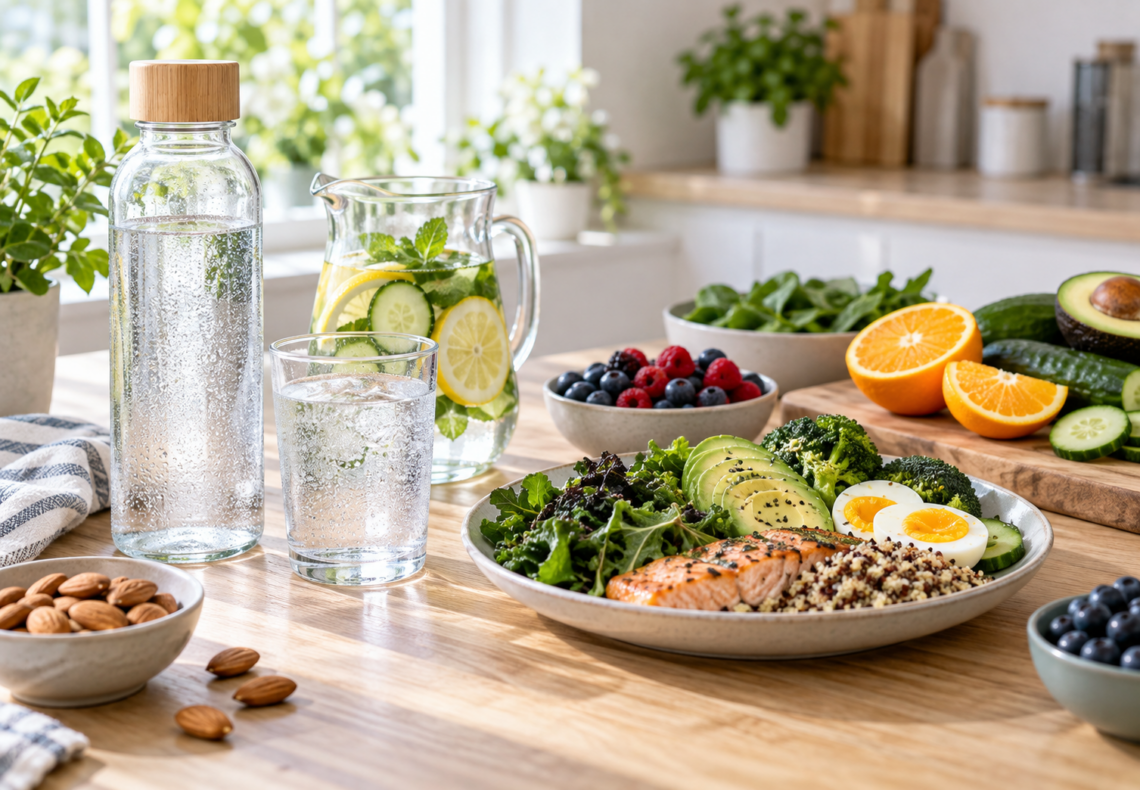
Starting an NAD+ wellness program may also be a good time to take a closer look at your everyday habits. While NAD+ is naturally involved in cellular processes, your overall wellness routine still depends on the basics including hydration, balanced nutrition, movement, sleep, and recovery.
You don’t need a complicated diet or an extensive list of supplements. Simple, consistent choices can make it easier to maintain a balanced routine.
Here are practical hydration and nutrition tips during an NAD+ wellness program to help you stay focused on your overall well-being.
Why Hydration Matters in Your Wellness Routine
Water plays a role in nearly every system in the body. It supports normal digestion, temperature regulation, nutrient transport, and everyday physical function.
Your hydration needs can vary depending on your activity level, climate, diet, age, and individual health. Rather than relying on one hydration target for everyone, pay attention to your routine and follow personalized guidance when needed.
Simple hydration habits include:
- Keeping water nearby throughout the day
- Drinking regularly rather than waiting until you feel very thirsty
- Increasing fluid intake when exercising or spending time in hot weather
- Including water-rich foods in your meals
- Limiting excessive amounts of sugary beverages
If you have a medical condition that affects fluid intake, follow your healthcare provider’s recommendations.
Nutrition and NAD+: What’s the Connection?
NAD+, or nicotinamide adenine dinucleotide, is a coenzyme naturally found in your cells. It participates in processes related to cellular metabolism and energy production.
The body can produce NAD+ using certain nutrients obtained through food. Vitamin B3 and the amino acid tryptophan, for example, are involved in pathways associated with NAD+ production.
However, eating a particular food doesn’t mean NAD+ levels will immediately increase. Nutrition is one part of a much broader cellular process.
Foods to Include in a Balanced NAD+ Wellness Routine
Instead of following a highly restrictive eating plan, focus on variety. Whole and minimally processed foods can provide protein, carbohydrates, healthy fats, vitamins, minerals, and other nutrients needed for normal body functions.
| Food Group | Examples | Nutritional Role |
| Protein-rich foods | Chicken, fish, eggs, beans | Provide protein, amino acids, and B vitamins |
| Whole grains | Brown rice, oats, whole-grain bread | Provide carbohydrates, fiber, and B vitamins |
| Vegetables | Leafy greens, peppers, broccoli | Provide vitamins, minerals, fiber, and water |
| Fruits | Berries, oranges, melon | Provide carbohydrates, micronutrients, and fluids |
| Healthy fats | Nuts, seeds, avocado | Provide dietary fats and other nutrients |
| Dairy or alternatives | Milk, yogurt, fortified alternatives | Can provide protein and selected vitamins and minerals |
The goal isn’t to find one “perfect” NAD+ food. A varied eating pattern can provide a broader range of nutrients.
Focus on Vitamin B3 and Tryptophan
When discussing nutrition and NAD+, vitamin B3 and tryptophan often receive attention because they can serve as building blocks in the body’s NAD+ pathways.
Food sources of vitamin B3 include:
- Chicken and turkey
- Tuna and salmon
- Peanuts
- Mushrooms
- Whole and fortified grains
Tryptophan can be found in foods such as eggs, poultry, fish, dairy products, soy, nuts, seeds, beans, and lentils.
These foods can easily fit into a balanced diet without making NAD+ the focus of every meal.
Don’t Forget Protein, Carbohydrates, and Healthy Fats
Wellness nutrition isn’t only about individual vitamins.
Protein provides amino acids used throughout the body. Carbohydrates are an important energy source, especially for active individuals. Dietary fats also contribute to normal body functions and can help make meals more satisfying.
Building meals around a combination of these macronutrients can make balanced eating simpler.
For example, a meal might include grilled fish, brown rice, vegetables, and avocado. A snack could be Greek yogurt with berries and nuts.
Make Water-Rich Foods Part of Your Day
Hydration doesn’t come only from your water bottle. Many foods naturally contain significant amounts of water and can contribute to overall fluid intake.
Consider adding:
- Watermelon
- Cucumber
- Oranges
- Strawberries
- Tomatoes
- Lettuce and leafy greens
- Broth-based soups
These foods also provide various vitamins, minerals, and other nutrients.
Be Careful With the “More Is Better” Approach
Interest in NAD+ has led to a growing number of supplements and wellness products. But taking larger amounts of a nutrient doesn’t necessarily provide additional benefits.
High doses of certain vitamins or supplements can also have unwanted effects or interact with medications.
If your NAD+ wellness program includes supplements or other products, discuss your complete routine with a licensed healthcare professional. Avoid adding additional supplements simply because they are marketed as being related to NAD+.
Keep Your Wellness Routine Simple
Supporting your overall wellness doesn’t have to mean completely changing your lifestyle overnight.
Focus on habits you can realistically maintain:
- Drink fluids regularly throughout the day.
- Eat a variety of nutrient-rich foods.
- Include adequate protein in your meals.
- Choose fruits and vegetables regularly.
- Stay physically active based on your abilities.
- Prioritize consistent sleep and recovery.
- Follow guidance from your healthcare professional.
Small, sustainable habits are often easier to incorporate into everyday life than overly restrictive routines.
The Bottom Line
Hydration and nutrition during an NAD+ wellness program are best approached as part of your overall wellness routine. NAD+ participates in normal cellular processes, while nutrients such as vitamin B3 and tryptophan are involved in pathways the body uses to produce it.
Rather than focusing on a single food, drink, or supplement, aim for balanced meals, regular hydration, physical activity, and adequate rest. And if you’re considering an NAD+-related product or program, a licensed healthcare professional can help you understand how it may fit with your individual needs.